Thinking beyond Honolulu for more space, newer homes, and an easier lifestyle? You are not alone. Many buyers are taking a fresh look at Kapolei, a growing hub on Oahu’s west side that blends master-planned neighborhoods with expanding services and transit. In this guide, you’ll see what “Second City” really means, how the housing and commute compare, and what is coming next so you can decide if Kapolei fits your plans. Let’s dive in.
What “Second City” really means
Kapolei was planned as Oahu’s regional second urban center to balance growth with jobs and services west of Honolulu. The idea dates to the 1970s and still shapes how the area grows today. That policy choice is why you see coordinated neighborhoods, retail, schools, and public services forming a true town center rather than scattered sprawl. You can read how this vision took shape in local planning history and debate in a detailed community report from Civil Beat.
Kapolei’s Second City planning roots
Planning goals at a glance
- Concentrate housing, jobs, and services in West Oahu.
- Support transit-oriented development around rail stations.
- Reduce pressure on the urban core by creating a self-sustaining center over time.
Who built Kapolei’s framework
Major landowners and state agencies partnered with national and local builders to phase in neighborhoods, roads, and public services. The result is a modern, master-planned city with a mix of single-family homes, townhomes, and condos tied to growing job and retail districts. That steady, long-horizon approach is why Kapolei feels newer and more organized than many legacy neighborhoods.
Housing and neighborhoods: what you’ll find
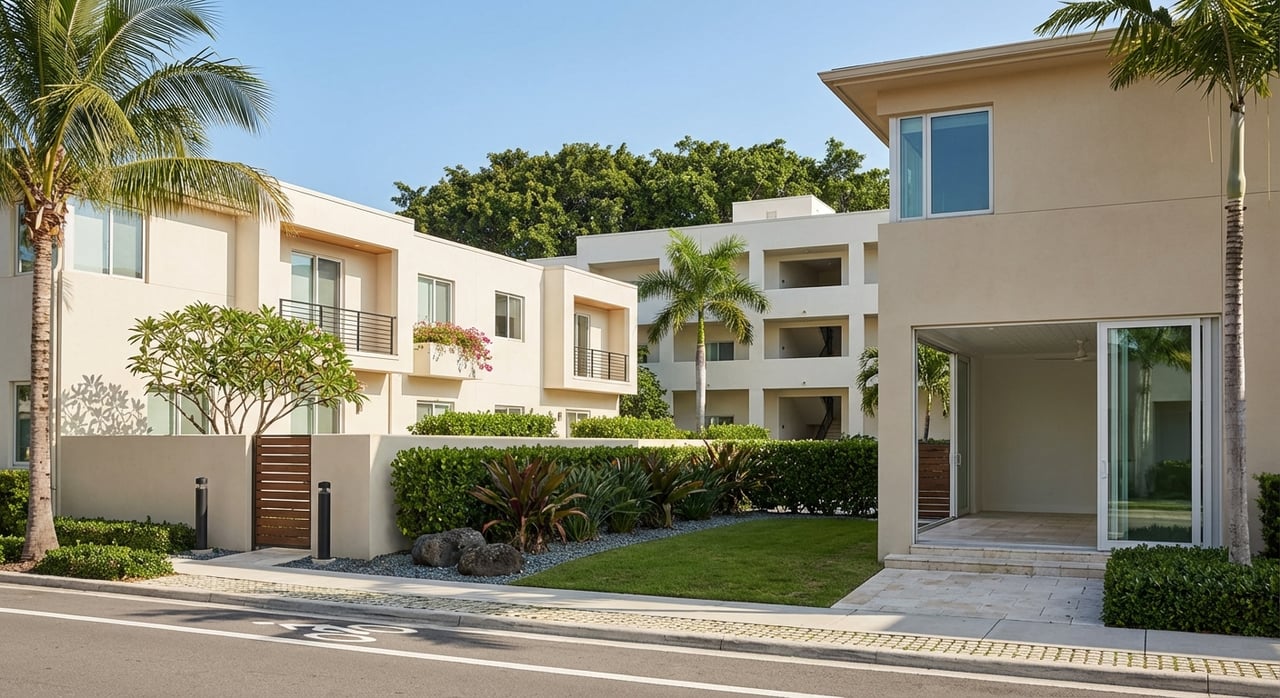
Kapolei’s housing mix is broad. You will see newer single-family homes with garages and lanais, townhomes and condos with shared amenities, and live-work options in master plans near rail. Much of the area was built after 1990, so layouts, finishes, and energy systems are more contemporary than in many older Honolulu properties.
According to U.S. Census QuickFacts for Kapolei, the community counted 21,411 residents in 2020 after growing from 15,186 in 2010. Median household income is about $128,324, the median value of owner-occupied homes is about $744,200, owner-occupancy is roughly 76.5%, and the mean commute sits near 31.2 minutes. These baselines help you compare Kapolei to other parts of Oahu as you set expectations.
Newer master plans and live-work options
One of the largest projects influencing West Oahu supply is Ho‘opili, a multi-decade master plan designed for about 11,700 to 12,000 homes. It offers a range of product types, including townhomes, condos, and single-family options, plus some live-work “FLEX” layouts. As phases open over time, you can compare new-build opportunities to resale homes across Kapolei’s established neighborhoods.
Explore the Ho‘opili community overview
Pricing and product variety
Price points vary widely by neighborhood, age, size, and HOA structure. You will find smaller townhomes that appeal to first-time buyers and larger single-family homes that serve as long-term primary residences. Because market medians shift each month and definitions by neighborhood differ, use an on-the-ground pricing review before you write an offer.
HOAs, fees, and what to ask
Most master-planned communities include HOA dues that cover shared amenities and maintenance. Fees differ by builder, phase, and property type. Before you commit, review the seller’s disclosure, HOA documents, and recent budgets to understand rules, reserves, and what your monthly payment covers.
Everyday living: anchors, services, and fun
Shopping and dining
Kapolei’s retail heart is Ka Makana Ali‘i, the regional mall with more than 100 stores, a movie theater, and a hotel. It has become a major hub for daily errands, dining, and entertainment, which limits long cross-island trips for basics. If you like having choices close by, this center is a standout.
Read about Ka Makana Ali‘i’s opening and role
Education and healthcare
The University of Hawai‘i–West O‘ahu campus opened in 2012 and anchors higher education and workforce training in the area. On the healthcare side, The Queen’s Medical Center – West O‘ahu provides full-service hospital care and has outlined multi-phase growth to serve the region. Together, these anchors add stability and daily convenience.
Queen’s West O‘ahu hospital and locations
Recreation and weekends
Local favorites include the beaches and lagoons at Ko Olina, golf, and parks spread across West Oahu. Wet ‘n’ Wild and family-friendly attractions sit near Kapolei’s core. The bottom line is you can keep a full weekend calendar without leaving the west side.
Jobs and business context
Kapolei’s economy blends retail, government services, logistics, light industrial, and healthcare. Business parks and the nearby harbor area continue to attract employers over time. The original Second City goal was to place jobs near homes, and that trend continues to build as projects and institutions expand.
Getting around: commute and transit options
Driving and baseline commute
Most residents still drive for work trips, especially if their jobs are in central Honolulu. The mean commute for Kapolei residents is roughly 31.2 minutes, but door-to-door times vary by time of day, route, and incidents. If the commute is key for you, test your specific drive during peak periods.
Kapolei commute and income baselines
Skyline rail and park-and-ride
Honolulu’s rail line, known as Skyline, is opening in segments to connect West Oahu with the urban core. Stations in East Kapolei, near UH West O‘ahu, and adjacent master plans are designed to support transit-oriented living. If you live near a station or plan to use park-and-ride, rail offers a predictable, non-driving option for parts of your commute.
Check Skyline station maps and service updates
Road projects and local circulation
State and city projects focus on East Kapolei and Kapolei Parkway intersections to ease bottlenecks and prepare for TOD areas. These improvements help local circulation and access to services. Peak-period delay still matters, so plan for variability if you commute by car.
State TOD resources and planning updates
What’s ahead: projects to watch
Ongoing Ho‘opili buildout
As Ho‘opili continues to deliver new homes over many years, it will keep adding variety to the West Oahu market. Expect different phases to roll out floor plans, amenities, and price points that can match first-time, move-up, and investor goals.
See the Ho‘opili plan overview
East Kapolei TOD and workforce housing
The island’s TOD framework aims to cluster homes and services around rail. One initiative to watch is Leiwili Kapolei, a workforce and affordable housing effort tied to East Kapolei’s growth. Projects like this can expand options for buyers who want new construction near transit.
Leiwili Kapolei FAQs and updates
Health services expansion
The Queen’s West O‘ahu campus has outlined plans to expand capacity over time. As healthcare grows locally, more residents can access services close to home, and jobs related to health services increase on the west side.
Weighing tradeoffs and risks
Kapolei’s evolution has sparked debate. Some argue early growth was too suburban and that jobs lagged behind housing. At the same time, new anchors such as the university, hospital, retail, and rail are steadily shaping a fuller Second City. The balance for you comes down to space, age of housing, and amenities versus your specific commute and lifestyle.
On the environmental side, coastal zones in West Oahu face sea-level rise exposure. Inland Kapolei neighborhoods are generally higher and drier, but every property is different. For any address you consider, review NOAA’s Sea Level Rise viewer and FEMA flood maps, and check property disclosures closely.
Is Kapolei right for you?
Kapolei could be a fit if you:
- Prefer newer homes and planned neighborhoods with sidewalks and parks.
- Want a strong retail and healthcare base nearby to reduce cross-island trips.
- Are open to using rail or park-and-ride if it improves your commute.
- Value being a short drive from resort-style beaches and golf.
- Need a range of home types, from townhomes to larger single-family options.
It may not suit you if you:
- Must be daily within minutes of the downtown Honolulu core by car during peak.
- Prefer older architectural styles or walk-up condos common in urban Honolulu.
- Want zero HOA involvement and fees.
If Kapolei is on your list, the next step is to compare real-time pricing by neighborhood, check HOA details, and map your commute to your exact workplace and school needs. A local, hands-on advisor can help you balance the tradeoffs and secure the right home at the right phase.
Ready to explore Kapolei? Reach out to Temari Malone to compare neighborhoods, set a budget, and see on- and off-market options tailored to you.
FAQs
What does “Second City” mean for Kapolei homebuyers?
- Kapolei was planned as Oahu’s second urban center with housing, jobs, services, and transit clustered together so you can live, work, and shop closer to home.
How do Kapolei home values and incomes compare to other areas?
- Census baselines show a median owner-occupied value around $744,200 and median household income near $128,324, which you can use to benchmark against other Oahu neighborhoods.
Will rail actually help my Kapolei commute?
- It depends on how close you are to a station and your destination; rail adds a predictable option, especially if you can park-and-ride, while car commutes still vary by time of day.
Is there new construction in Kapolei right now?
- Yes. Multi-phase master plans such as Ho‘opili continue to add townhomes, condos, and single-family options, with pricing and HOA details varying by phase.
What should I check before buying near the coast in West Oahu?
- Review flood and sea-level rise maps, study HOA and insurance requirements, and confirm site-specific conditions in the seller’s disclosure and professional inspections.